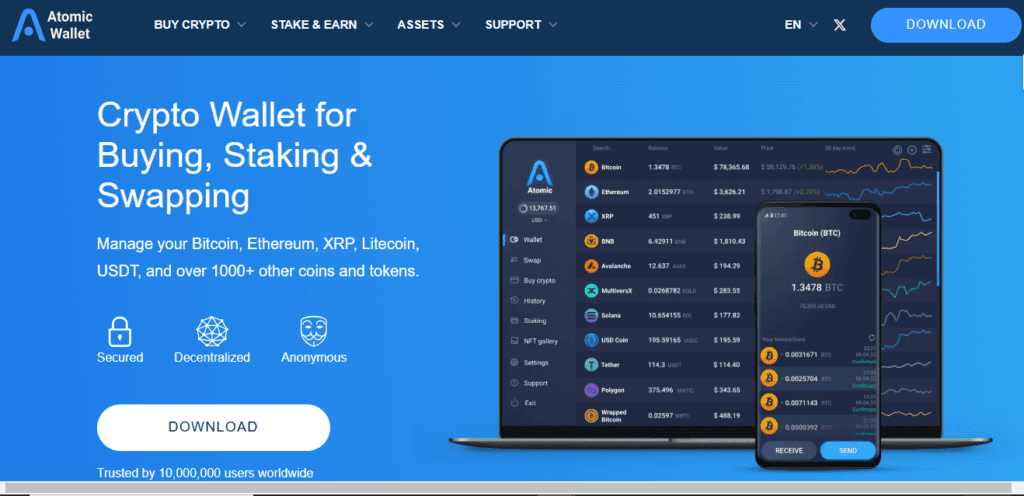
Atomic Wallet: A Fully Updated 1200-Word Overview of the Decentralized Crypto Wallet
Atomic Wallet has become a well-known choice among individuals seeking a secure, private, and intuitive way to manage cryptocurrencies independently. At its core, it is a decentralized wallet—meaning users maintain complete control over their digital assets without the involvement of custodial intermediaries. For many, this independence represents both freedom and responsibility, as users safeguard their own private keys, manage their own security, and control every transaction from start to finish.
This guide offers an in-depth exploration of Atomic Wallet, covering its core functionality, benefits, features, user experience, and essential security considerations. Whether you are a first-time crypto user or an experienced investor, understanding how Atomic Wallet works can help you make informed decisions when managing digital assets.
What Is Atomic Wallet?
Atomic Wallet is a multi-currency, software-based cryptocurrency wallet that operates through a non-custodial model. In this type of environment, users are the sole owners of their private keys. Unlike centralized exchanges, where private keys are stored on remote servers, Atomic Wallet keeps keys encrypted locally on the user’s device.
This design provides maximum financial autonomy. Users can send, receive, store, and swap various cryptocurrencies without giving up control to a third party. Privacy also plays a major role, as the wallet does not require identity verification, account registration, or personal data submission. Each user interacts directly with their device and the blockchain.
Main Characteristics of Atomic Wallet
Atomic Wallet is known for its combination of convenience, security, privacy, and broad cryptocurrency support. Below are the features that most users appreciate.
1. Decentralized and Non-Custodial Infrastructure
The wallet does not rely on centralized storage. Your private keys never leave your device. This decentralization eliminates dependence on external servers and reduces the risk of hacking incidents involving centralized databases.
2. Multi-Asset Compatibility
Atomic Wallet supports hundreds of cryptocurrencies, including major blockchains and numerous tokens. This wide support allows users to manage diversified portfolios in one place rather than juggling multiple wallet applications.
3. Straightforward Interface
The layout is built with accessibility in mind. Even users new to digital wallets can navigate the interface quickly. Key functions—sending, receiving, and viewing balances—are laid out clearly and require only a few clicks.
4. Built-In Swapping Features
A convenient aspect of Atomic Wallet is the ability to swap cryptocurrencies directly within the app. Users can exchange one asset for another without needing to move funds to external exchanges, making it easier to respond to market changes.
5. Staking Support
Certain cryptocurrencies offer staking rewards through the wallet. With staking, users contribute to the operation of blockchain networks and receive compensation in return. This creates an opportunity for passive income.
6. Cross-Platform Availability
Atomic Wallet is accessible on both desktop and mobile devices, offering flexibility for different types of users. Regardless of the platform, the wallet delivers consistent performance and features.
How Atomic Wallet Works Behind the Scenes
Understanding how Atomic Wallet functions can help users manage their assets more efficiently and securely.
Local Key Storage
Upon setup, the wallet generates private keys and stores them locally. These keys are encrypted and never uploaded to external servers. This ensures that only the device owner has access to their wallet’s private information.
Recovery Phrase System
When the wallet is created, users are shown a recovery phrase. This phrase serves as the master key to restore access to the wallet in cases where the device is lost, stolen, or damaged. Protecting this phrase is essential because it controls access to the assets stored in the wallet.
Blockchain Interaction
Atomic Wallet interfaces with blockchain networks directly or through distributed nodes. When users send transactions, the wallet signs them locally and broadcasts them to the appropriate network. No centralized system controls the movement of funds.
Setting Up Atomic Wallet for the First Time
The wallet’s setup process is intentionally simple to attract both beginners and veterans in the cryptocurrency space.
1. Installation
Users install the wallet on their chosen device and launch the application.
2. Creating a New Wallet
Upon launch, the software generates a new wallet with unique private keys.
3. Saving the Recovery Phrase
This is one of the most important steps. The recovery phrase is displayed once and must be written down or stored securely offline. Without it, the wallet cannot be recovered.
4. Beginning Crypto Management
Once the setup is completed, users are ready to receive assets, send transactions, or explore staking and swapping functionalities.
Using Atomic Wallet to Manage Crypto Assets
Atomic Wallet was designed to make crypto management uncomplicated and streamlined.
Sending Funds
To send cryptocurrency:
Select the asset
Enter the receiving address
Input the amount
Approve the transaction
The wallet generates a digital signature, confirms the action locally, and then broadcasts it to the blockchain.
Receiving Funds
To receive assets, users simply copy their wallet address or share the QR code assigned to that cryptocurrency. Transactions appear once they are confirmed on the blockchain.
Tracking Activity
The wallet provides updates for each asset, including recent transactions and balance changes. Users can review all activity from the wallet’s transaction history section.
Swapping Cryptocurrencies
The built-in swap tool enables users to convert assets directly within the wallet without using external exchange services.
Portfolio Monitoring and User Interface
Atomic Wallet presents a visually organized portfolio dashboard. It displays total value, individual asset balances, holdings distribution charts, and price fluctuations.
Key Portfolio Features Include:
Clear representation of cryptocurrency values
Price updates based on market conditions
Color-coded asset distribution
Asset-specific transaction histories
These features allow users to monitor their financial activity at a glance.
Staking Options Within Atomic Wallet
Staking is one of the wallet’s standout offerings for users looking to earn rewards.
How Staking Works
Certain networks allow holders to lock up their coins to support blockchain operations. In return, users receive rewards based on the coin’s staking system.
Staking Benefits
Opportunity for passive income
No need for external staking platforms
Direct control over staked crypto
The wallet’s staking dashboard provides estimated returns, available assets, and clear instructions for participating.
Security Practices in Atomic Wallet
Security is a major part of the Atomic Wallet experience. While the wallet offers strong local encryption and decentralized storage, users must also adopt protective habits.
Local Encryption
Your private keys remain stored on your device and are encrypted with advanced algorithms.
Recovery Phrase Protection
The recovery phrase should be written down, stored offline, and never shared digitally.
Device Security
Users should ensure their device is protected with secure passwords or biometrics, and they should keep their operating system and apps updated.
Cautious Downloading
Because private keys reside on the user’s device, downloading suspicious files or software can introduce malware. Only trusted sources and secure devices should be used with Atomic Wallet.
Advantages of Using Atomic Wallet
Users often choose Atomic Wallet for the following reasons:
Full ownership of private keys
Strong privacy
Wide coin and token support
Built-in swapping features
Staking opportunities
User-friendly design
No identity requirements
Availability across major platforms
All of these qualities make Atomic Wallet appealing to both beginner users and seasoned cryptocurrency investors.
Best Practices for Long-Term Safety
While Atomic Wallet itself is secure, maintaining long-term safety depends on user responsibility.
Best Practices Include:
Keep the recovery phrase offline and protected
Use secure devices for wallet activity
Avoid sharing wallet information
Update the wallet and device regularly
Enable device-level security features
Always double-check receiving addresses before sending crypto
By following these recommendations, users can reduce the likelihood of losing access or encountering security threats.
Conclusion
Atomic Wallet provides a robust, private, and decentralized way to manage digital assets. Through local storage of private keys, a user-friendly design, wide crypto support, and features like staking and swapping, it offers a well-rounded solution for anyone seeking autonomy in the crypto space.
However, with autonomy comes responsibility. Users must safeguard their recovery phrase, maintain secure devices, and remain vigilant in how they interact with their wallet. By combining Atomic Wallet’s built-in security with responsible crypto practices, individuals can confidently store, manage, and grow their digital assets in a decentralized environment.